


May 15, 2026
Introduction
Field service operations are evolving faster than ever. Businesses today are expected to deliver quicker responses, better service experiences, and seamless communication while managing distributed field teams efficiently. Traditional methods are no longer enough to meet rising customer expectations and operational demands.
This is where Artificial Intelligence (AI) is changing the game.
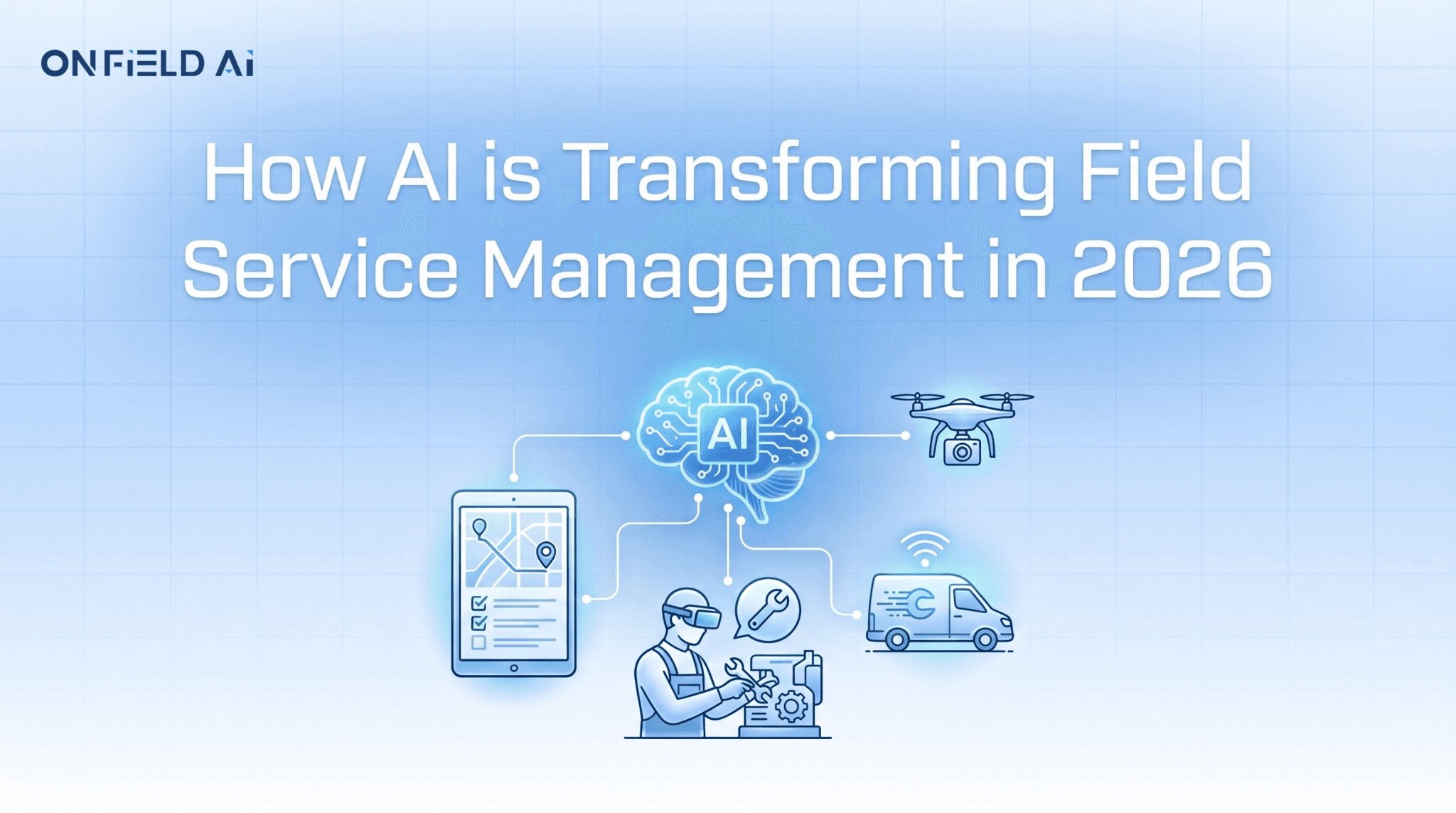
In 2026, AI-powered technologies are helping businesses automate workflows, optimize field operations, improve technician productivity, and make smarter business decisions. From predictive maintenance to intelligent scheduling and automated reporting, AI is reshaping how companies manage field teams and customer service operations.
Modern Field Service Management Software now goes beyond basic task management by using AI to deliver real-time insights, automation, and operational intelligence.
What is AI in Field Service Management?
AI in field service management refers to the use of machine learning, automation, predictive analytics, and intelligent algorithms to improve field operations and service delivery.
AI-powered systems analyze operational data, workforce activities, customer requests, and service history to automate tasks and optimize workflows.
Businesses using advanced Field Service Management Software can now:
- Predict service requirements
- Automate technician scheduling
- Optimize field routes
- Improve response times
- Reduce operational costs
- Deliver better customer experiences
AI enables businesses to move from reactive operations to proactive service management.
Why AI is Important for Field Service Operations in 2026
Field operations are becoming increasingly complex as businesses scale across multiple locations and customer touchpoints.
Common operational challenges include:
- Delayed technician assignments
- Poor workforce visibility
- Inefficient scheduling
- Manual reporting processes
- High operational costs
- Lack of real-time decision-making
AI helps businesses overcome these challenges by automating repetitive tasks and providing actionable insights.
In 2026, companies are focusing more on operational efficiency, workforce optimization, and customer satisfaction. AI-powered solutions are becoming essential for businesses that want to stay competitive.
Key Ways AI is Transforming Field Service Management
1. Intelligent Technician Scheduling
One of the biggest benefits of AI is smart scheduling.
Traditional scheduling often causes delays and inefficient technician allocation. AI-powered systems automatically assign tasks based on:
- Technician availability
- Skill set
- Location
- Priority level
- Workload capacity
This improves operational efficiency and reduces service delays significantly.
2. Predictive Maintenance
AI can analyze historical service data and equipment performance to predict potential failures before they happen.
This allows businesses to:
- Prevent unexpected downtime
- Reduce maintenance costs
- Improve asset performance
- Deliver proactive service support
Predictive maintenance is especially valuable for industries like manufacturing, HVAC, telecom, and equipment servicing.
3. Real-Time Workforce Tracking
Modern Field Force Management Software uses AI-powered tracking and analytics to monitor workforce activities in real time.
Businesses can:
- Track technician locations
- Monitor attendance and travel
- Analyze productivity levels
- Improve field accountability
Real-time workforce visibility helps managers make faster decisions and improve operational control.
4. Automated Reporting & Insights
Manual reporting consumes valuable time and often results in inaccurate data.
AI-powered platforms automate:
- Daily activity reports
- Service updates
- Performance analytics
- Operational dashboards
Managers receive real-time insights into field operations, helping them identify inefficiencies and improve execution.
5. Smarter Customer Support
AI improves customer service by enabling faster communication and issue resolution.
Businesses can:
- Automate service updates
- Provide accurate ETA predictions
- Improve response times
- Personalize customer interactions
This leads to better customer satisfaction and stronger brand trust.
6. Route Optimization for Field Teams
Traffic delays and inefficient routes reduce workforce productivity.
AI-powered systems optimize routes based on:
- Traffic conditions
- Distance
- Service priority
- Technician location
This helps businesses reduce travel time, lower fuel costs, and increase the number of daily service visits.
Role of AI in AMC Management
AI is also transforming AMC Management by helping businesses automate recurring service operations and contract workflows.
Businesses can use AI to:
- Predict maintenance schedules
- Automate contract renewals
- Track SLA compliance
- Monitor service history
- Improve customer retention
AI-powered AMC management helps businesses reduce manual coordination and improve service consistency.
AI and Sales Force Automation
Field sales teams are also benefiting from AI-driven automation.
Modern Sales Force Automation platforms use AI to:
- Prioritize leads
- Automate follow-ups
- Predict sales opportunities
- Analyze customer behavior
- Improve sales forecasting
By combining sales automation with field operations, businesses create a connected ecosystem that improves both revenue generation and customer experience.
Industries Benefiting from AI-Powered Field Service Management
HVAC & Maintenance Services
AI helps optimize technician scheduling, preventive maintenance, and service delivery.
Manufacturing Companies
Businesses can monitor equipment health and predict maintenance requirements more accurately.
Healthcare & Medical Equipment
AI improves service scheduling and maintenance management for critical medical devices.
FMCG & Distribution
Field teams can improve route planning, order management, and sales execution.
Telecom & Utility Services
AI enables faster issue resolution and better workforce coordination.
Benefits of AI-Powered Field Service Management
Improved Productivity
Automation reduces manual tasks and allows teams to focus on high-value activities.
Faster Response Times
AI optimizes scheduling and dispatch processes for quicker service delivery.
Better Decision-Making
Real-time analytics and predictive insights help managers make smarter operational decisions.
Reduced Operational Costs
AI improves route planning, workforce utilization, and workflow efficiency.
Enhanced Customer Experience
Faster service and proactive communication improve customer satisfaction significantly.
How Onfield AI is Transforming Field Operations
Onfield AI provides an intelligent platform designed to simplify field service operations, workforce management, and sales execution.
With AI-powered automation and real-time operational insights, businesses can:
- Track field employees efficiently
- Automate workflows and reporting
- Optimize technician scheduling
- Improve sales and service coordination
- Monitor operational performance in real time
By combining intelligent automation with workforce visibility, Onfield AI helps businesses improve efficiency, productivity, and customer service experiences.
Future of AI in Field Service Management
The future of field service management will become increasingly data-driven and automated.
In the coming years, businesses will rely more on:
- AI-powered predictive maintenance
- Automated decision-making
- Smart workforce optimization
- Intelligent customer engagement
- Advanced operational analytics
Companies adopting AI early will gain a competitive advantage through faster operations, lower costs, and better customer experiences.
Conclusion
AI is redefining how businesses manage field operations in 2026. From intelligent scheduling and predictive maintenance to workforce tracking and automated reporting, AI-powered solutions are helping organizations improve efficiency and deliver better service experiences.
Modern Field Service Management Software is no longer just about task management—it’s about creating smarter, connected, and data-driven operations.
Businesses looking to scale field operations, improve productivity, and enhance customer satisfaction should invest in AI-powered platforms like Onfield AI to stay ahead in the evolving service industry.